ServicesRoof Treatments
Roof Treatments in Halfmoon, NY
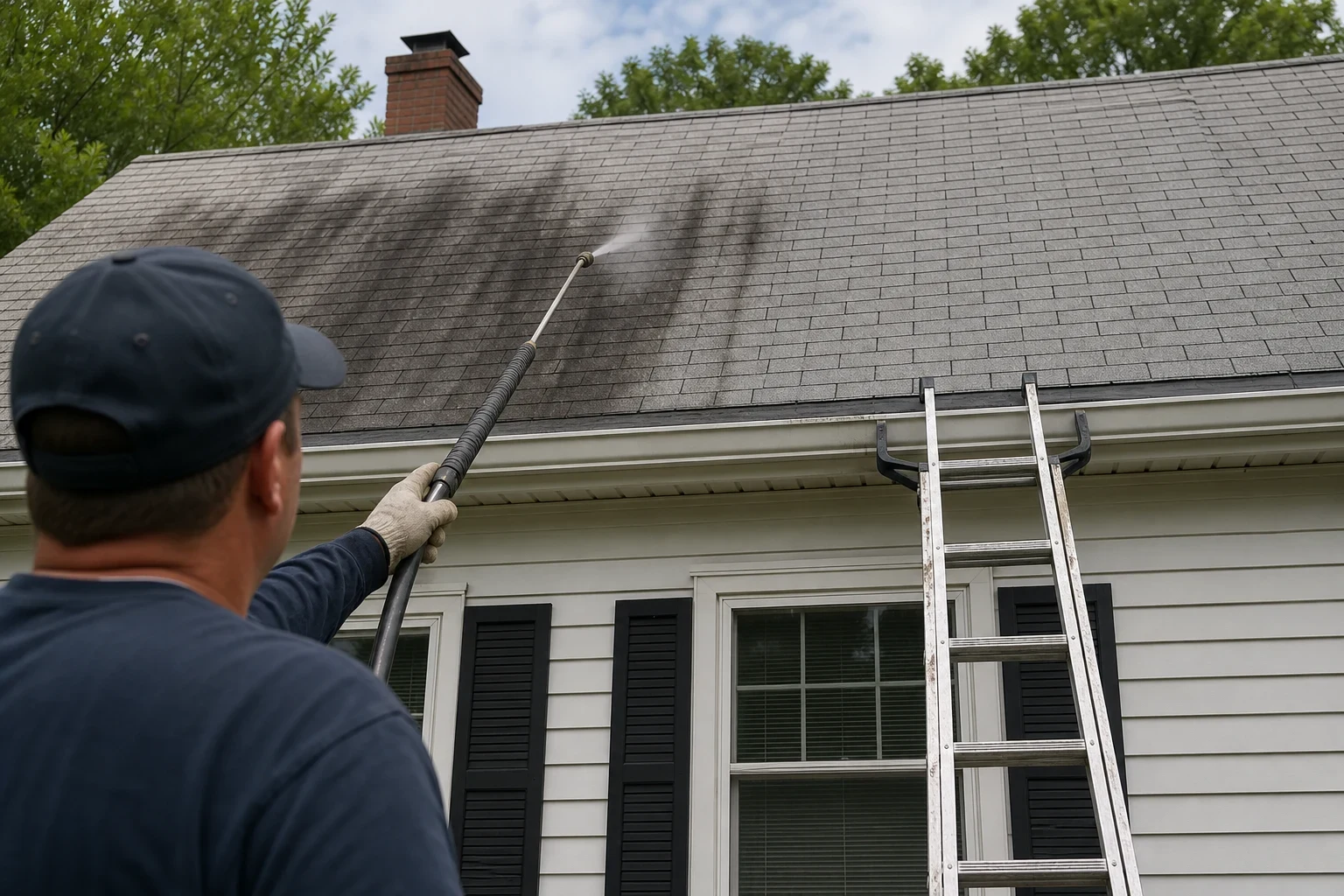
Moss, algae and lichen hold moisture against your shingles and wear them down a little each season. We apply a low-pressure treatment that kills the growth at its source, protect the plantings below your roofline and photograph each slope, so you have a clear record of your roof's condition.
What a Roof Treatment Does
A roof treatment is a solution applied at low pressure that kills algae, moss and lichen on the shingles. Nothing is scrubbed or blasted. The growth dies on contact, and over the following weeks rain carries the residue off the roof, so the color comes back gradually instead of all at once.
Most asphalt shingles contain limestone filler, and the algae behind those dark streaks feeds on it. Moss is the bigger worry. It holds water against the shingle, and through a Capital Region winter that trapped moisture freezes and thaws until edges lift and granules loosen. Treating early is gentler on the roof than waiting until the growth is thick.
We also look closely while we are up there. If we see lifted tabs, missing granules or storm damage, we photograph it and explain what it likely means, including how homeowners usually bring documentation to an insurer. We do not act as your adjuster, and we will tell you plainly when something looks like normal wear.
What Every Treatment Includes
A walk-around before we start
We look at the roof from the ground and the ladder, note the material and pitch, and point out the heaviest growth. You hear what we plan to do before any product goes on.
Protecting plants and finishes
We wet down shrubs and beds below the roofline and cover delicate plantings. Siding, trim and walkways get a rinse afterward so overspray does not sit on them.
Low-pressure application
The solution is applied evenly at low pressure, slope by slope. Shingle granules stay where they belong, which matters for how long the roof lasts.
Dated photos of the roof
We take photos of each slope and any spot that concerns us. You keep them, and they give you a clear record of the roof's condition on that day if you ever need to speak with your insurer.
A plain report on what we saw
Before we leave, we tell you what we treated, what we noticed and whether anything deserves a closer look by a roofer.
When a Roof Treatment Makes Sense
Black streaks down the shingles
Those dark or gray stripes are most often algae, not soot or dirt. They usually begin on the shady side and spread from there.
Soft moss or green patches
Moss on shingle edges and in valleys traps moisture. Given time, it can raise tabs and let water get underneath.
Round, crusty spots
Lichen holds on hard to the granules. It grows slowly but is stubborn, so it's worth treating before it spreads.
Trees shading the roof
A roof under trees stays wet longer after rain and melting snow. Growth returns sooner there, so regular treatment is a good fit.
A roof that looks older than its age
When the shingles are sound but the color looks blotchy, a treatment often restores the look of the home exterior without any need to discuss replacement.
How the Day Goes
- 1
Phone conversation and quote
You tell us about the roof and what you are seeing. We ask a few questions about size, height and growth, then set a time to look and give you a free quote.
- 2
Prep around the house
On the day, we wet and cover plantings, move anything fragile from below the eaves and check that downspouts are clear to drain.
- 3
Treatment and photos
We apply the solution slope by slope and photograph the roof as we go. Most homes are finished in a few hours.
- 4
Rinse, walk-through and follow-up
We rinse siding and walkways, walk you through the photos and explain what to expect over the next several weeks as rain clears the dead growth.
What Shapes the Price
Every roof is quoted after we know what it involves. You get the number by phone or in person before any work starts, and if we see anything that could change it, we tell you before we begin. These are the things that move it.
- Roof size and pitch
- More square footage takes more solution and time. Steep slopes need extra safety setup.
- How heavy the growth is
- Light algae streaks treat quickly. Thick moss or widespread lichen may need a heavier application or a second visit.
- Access and height
- Two-story homes, tight side yards and dense landscaping below the eaves all add setup and protection time.
- Roofing material
- Asphalt shingles are the most common. Cedar, slate and metal each call for a different approach and product strength.
- One-time or ongoing
- Some homeowners prefer a maintenance schedule, especially on shaded roofs, which changes how the work is planned.
Common Roof Treatment Questions
Something not covered here? (518) 500-4995
Can the treatment hurt my shingles?
Not when it goes on at low pressure and the correct strength. High pressure never touches a roof of ours, since it knocks off granules and shortens a shingle's life. The product works chemically, and rain handles the rest.
When will the streaks be gone?
You may see some lightening in a few days. Most of it fades over several weeks as rain rinses off the dead growth. Thick moss can need a whole season to loosen and drop off.
What about my plants?
Before we start, we soak and cover the beds and shrubs under the roofline, and we rinse them again at the end. That keeps any runoff watered down and off roots and leaves.
Does homeowners insurance cover a treatment?
Generally not, since most policies count moss and algae as normal upkeep. If we spot damage that looks like it came from a storm, we photograph it and explain how homeowners usually pass that to their insurer, but your insurance company and adjuster make the coverage call.
How often should a roof be treated?
That depends on shade, pitch and drainage. A sunny roof may go a few years between treatments, while one under trees usually does better with a light visit every year or two.
Does someone need to be home?
Not for all of it. We'd like to see you at the start to go over the plan, and if you have to leave, we can review the photos with you by phone later.
See Where Your Roof Stands
Tell us what you are seeing on the shingles and we will walk you through the options. The quote is free, and you will know the price before we start.